How Specialized Cocktail and Kombucha Dispensing Systems Work
Draft cocktails and kombucha have quickly become less of a fad and more of a necessity when updating your tap list. These beverages are faster, more consistent, and can have that extra modern day wow factor. They also present unique challenges that typical beer taps and lines are simply not equipped to handle.
How do these unique draft systems work? And why can’t you use your traditional draft lines for everything? Let’s deep dive into the specific differences, advantages, and “real-world” reasons for operating a system built specifically for cocktails and kombucha. By the end of this article, you will be left with a clear understanding of exactly what is needed to run the perfect draft cocktail or kombucha consistently.
What Makes Cocktails and Kombucha So Different?
While all draft systems may look similar at first glance, cocktails and kombucha require their own special set of needs. While it is possible to run these drinks on your standard beer lines, you are setting yourself up for a world of problems, such as off-tasting beverages, messy pours, and prematurely aging equipment. Here’s why:
Acidity and Potential for Corrosion
Citrus and other acidic ingredients are often major parts of cocktails, while kombucha is an acidic product in its own right. When beer lines or hardware contain metals such as chrome-plated brass or lower-quality steel, that acidity will lead to corrosive damage over time. You get metallic off-tastes in your product, leaking lines, and a system that will need replacing early.
Viscosity and Sugar Content
Need we say more? A standard line filled with cocktails mixed with syrups and juice concentrates is simply thicker and stickier overall. Sugar buildup in your lines and taps will lead to sticky clogs that are a headache to clean and, worse, potential food safety concerns from bacteria. Kombucha has plenty of organic material of its own, so you need hardware that’s non-absorbent, easy to clean, and designed to minimize residue.
Carbonation and Gas Blending
CO2 can carbonate beer and some cocktails, but not all. Nitrogen can be used on its own for nitro coffee or beer or mixed with CO₂ for smooth soda or light cocktails. Draft cocktails often include some lightly sparkling products, while kombucha needs careful carbonation control. If your system cannot handle mixed gases, you risk serving flat drinks or, worse, products that are too foamy and waste your profit margins.
Sanitation Concerns
The additional sugar content, fruit content, and bacteria, in the case of kombucha, mean these beverages can easily form bacterial growth if your system has hard-to-clean parts, inaccessible areas, or the wrong materials. Sanitation is a serious concern, and one that goes hand in hand with flavor concerns. Residue from one drink that’s not fully cleaned can contaminate another drink, potentially making your customers sick.
The Components of a Purpose-Built Draft System
Now that we know a little more about what is available and how the lines are different, let’s take a closer look at what goes into building a system and why each component matters:
Materials Matter
First things first—when you’re making a draft system that’s meant to pour cocktails or kombucha, everything that comes into contact with your product has to be more than just a regular fitting or component. While it may sound like nitpicking, every piece of hardware from keg to faucet has been carefully selected for its long-term durability, ease of sanitation, and ability to preserve the flavor of your products. Here’s how that’s achieved:
Specialty Faucets
Typically, you will see two faucets being used:
- Positive-Sealing Faucets: Designed to keep residue and air from pooling inside the tap, thus, less bacteria risk and easier end-of-shift cleaning.
- Variable-Flow Faucets: These allow bartenders to adjust the pour for different drink styles. Pouring a lightly carbonated kombucha one second and a syrupy cocktail the next? Easy—just adjust the flow to keep a clean and spill-free pour.
Barrier Tubing
When it comes to moving product from keg to tap, the tubing that fits inside the keg coupler and gas lines is engineered to protect your drinks from oxygen, which negatively affects flavor, and to ensure there’s nowhere for product residue to collect. No more “beer lines” or “wine lines”—the right tubing means every line is clean and every product is protected against cross-contamination when you switch kegs.
Gas Blending and Regulation
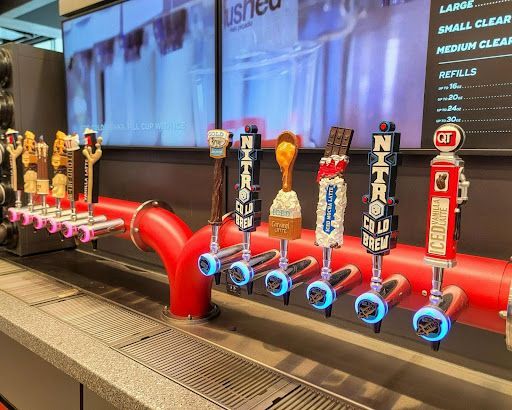
If you have different beverages on your system, say, a still cocktail next to a nitro cold brew, it is important to have the right blend of gas pressure for each beverage. Gas blenders and secondary regulators allow you to customize each beverage with its own dedicated line, pressure, and gas profile, whether it is 100% CO2, 100% nitrogen, or a mix of both.
Refrigeration that Supports Your Product
Draft systems that pour both beer and non-beer beverages also have refrigeration systems that keep those beverages away from warm spots in your bar and deliver a consistent, perfectly cool pour every time. This means both direct-draw coolers and glycol-cooled trunk lines are available in custom configurations to keep everything as fresh as possible.
Operational Advantages for Draft Systems
Serving draft cocktails and kombucha is not just about a menu design choice, it is about meeting a service need and making the most money while doing it. Draft systems can help you do that in several ways, including:
- Speed and Efficiency: Bars are busy. Fewer seconds waiting to assemble cocktails means more customers you can serve. The speed of draft cocktails makes them great for efficiency.
- Consistency and Quality Control: Draft drinks have the added benefit of “quality control.” Each glass is filled with the same mixture, eliminating inconsistencies in drink quality such as strength, flavor, and carbonation that can arise from manually prepared beverages.
- Reduced Product Waste: Draft systems allow you to save money on your beverage costs. Cocktail glasses with imprecise over-pours can mean a lot of product waste, not to mention the risk of mixing flavors of two completely different cocktails.
- Increased Profitability: Faster service, greater consistency, and more control can all help you improve profit margins on each drink. This improved efficiency offers a significant advantage, allowing for cost savings derived from optimized systems rather than reduced material quality.
- Expanded Menu Offerings: Draft systems offer the chance to rotate and experiment. Want to introduce new seasonal cocktails or test new kombucha flavors? Draft systems allow for smooth transitions to different beverages, without extra complexity on the back end.
Designing a Custom Draft Cocktail and Kombucha Program
Draft cocktails and kombucha are more than just trends, rather they are not going away anytime soon. The challenge is bringing them to your guests safely and consistently day after day. The good news is that by investing in a purpose-built draft system, you can avoid technical and logistical problems down the road, and you will be setting yourself up for operational ease, happy guests, and increased profitability.
Installing or upgrading a draft system is an investment, which is why we are here to help. We have the knowledge and experience to guide you through every step of the process. At Retail Dispense Solutions we have the expertise to help you design a custom beverage draft program. From the meticulous design to the precise installation, our experienced team will fine-tune your system to match your menu, service style, and goals, ensuring you get the maximum value from every keg and every pour.