Choosing the Best Draft System for Long - Distance Tap Setups
Choosing the Best Draft System for Long-Distance Tap Setups Pouring a perfect pint out of a tap that is across the room from the cooler is an art form. It is never quite as easy as you would like it to be, and even the highest-quality beverages suffer when they have to travel distances. Temperature swings, pressure issues, flat pours, foamy pours—all of these factors can influence long-draw dispensing.
The good news is that you have options when it comes to your draft system setup. The right solution can help you overcome all the challenges of distance and design so you can serve great-tasting, consistent drinks no matter where your taps are located.
In this post, we will walk through the top system choices available and discuss what to look for when choosing a draft system for long-draw dispensing. By the time you are done reading, you will have all the information you need to make the best choice for your bar, restaurant, or venue.
The Biggest Challenges with Long-Distance Draft Systems
The moment your cooler and tap setup are not adjacent to each other, the risk of issues and quality problems starts to increase. The further your chosen beverage has to travel, the more complex it is to dispense at a consistent temperature and carbonation level.
Beer, for instance, is best served at 36-38°F. The problem is that every few feet of line-run outside a cooler, or glycol trunk line, is going to warm a beverage by a degree. And if those lines are not properly insulated, your beer can warm by several degrees. Warm beer results in excessive foam, product waste, and frustrated customers.
Carbonation is also at risk if the pressure in the system is not optimized for your setup. Too much pressure can result in a glass full of foam, while a lack of pressure will leave your beer flat. Yeast, bacteria, and oxidation can also have a negative effect if longer lines aren’t regularly cleaned and maintained.
Pros and Cons of Direct Draw and Glycol-Cooled Draft Systems
In general, there are two very popular solutions for draft systems: direct draw and glycol-cooled. Both are tried-and-true, and both can provide excellent results, but if you are running taps on the other side of the room, or the other side of the building, only one is a truly optimal solution.
Direct Draw Systems
Direct draw refers to the classic “kegerator” setup where the taps are on the cooler (or very, very near to it) and the lines run less than five feet from the keg to the faucet.
Pros:
- This type of draft system is typically easy to set up with minimal upfront investment.
- Maintenance is a breeze since the lines are relatively short and accessible.
Cons:
- Distance is limited, so if your bar setup puts taps far away from your cooler, this is likely not a viable option.
- Typically accommodates only a few kegs at once, limiting the variety of drinks you can serve.
Glycol-Cooled Draft Systems (Long-Draw)
For taps located more than 25 feet from the cooler, a glycol-cooled draft system is required. A glycol system uses a chilled glycol-water solution that safely circulates alongside the beverage lines in a trunk line. This keeps your chosen beverages at a consistent, cold temperature across runs that can span hundreds of feet.
Pros:
- Temperature is maintained along the entire run (even over 500 feet).
- Tap locations are more flexible since you’re not limited to near-cooler placement.
- Can be used for multiple different beverages and large numbers of taps.
Cons:
- Upfront costs are higher due to more specialized components and equipment.
- Setup is more complicated and typically should be performed by professionals.
| Feature | Direct Draw System | Glycol-Cooled System |
|---|---|---|
| Effective Distance | Under 25 feet | 25 to 500+ feet |
| Initial Cost | Low | High |
| Maintenance | Simple | More Complex |
| Ideal Use Case | Taps on walk-in cooler; kegerators | Bars with remote coolers; large venues |
| Design Flexibility | Very Limited | High |
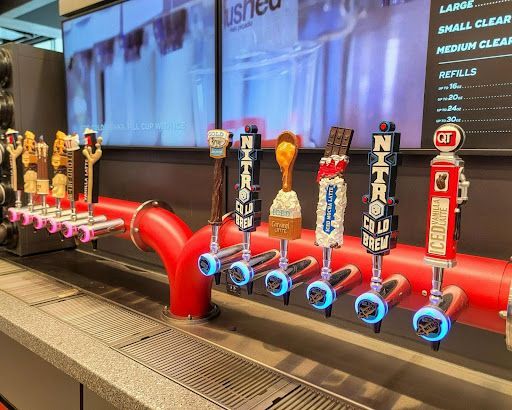
5 Things to Consider When Choosing a Long-Distance Draft System
Distance is the key factor when it comes to deciding between direct draw and glycol-cooled systems. But it is not the only thing to consider when you are shopping for a draft system. Here are several other important factors we recommend taking into account.
1. Distance and Line Elevation
You should begin by carefully mapping out the intended distance, including elevation. An example is when you are pouring from taps on a second-floor bar or a beverage closet above ground level. You need to add a little more pressure for every foot of vertical gain, with a common rule of thumb being about 0.5 PSI per foot.
2. Number of Beverages and Variety
You may only be dispensing beer, or you may want to offer nitro coffee, cocktails, or wine too. Each of these beverages may have different carbonation and gas-blending requirements, so ensure your system has the capability of handling multiple beverages with separate lines and regulators as needed.
3. Installation and Space Considerations
Glycol systems require space for the beverage lines and a space for the glycol power pack as well as the insulation. Review the space available and consider your route in advance. The lines might need to snake through the ceiling or below the floor to get from cooler to taps.
4. Budget and ROI (Return on Investment)
A glycol system will cost more upfront, but you will typically save money in the long run with lower waste and increased customer satisfaction. Remember that the right draft system is an investment in your brand and the health of your business.
5. Maintenance and Ease of Cleaning
All draft systems require regular maintenance. But long-draw dispensing systems need to be professionally cleaned every two weeks or so. Do not try to cut corners on routine or glycol power pack maintenance, as doing so can be a safety risk and will reduce equipment life.
The Takeaway: Quality Pours Make the Best Bottom Line
At the end of the day, the right draft system is going to be one of the best investments you can make for your business. For short, simple runs, direct draw is a tried-and-true solution that is easy and affordable. But when you need to cover longer distances or remote taprooms, a glycol-cooled system is truly the gold standard. It gives you design flexibility, pours at ideal temperatures, and consistent quality all the time.
It is always a good idea to seek professional input before making a system decision. Our trusted team at Retail Dispense Solutions is here to help you choose the best solution for your space, drinks, and business objectives, so that you can continue to offer great beverages and happy customers with every pour.